Hardware
One server design.
Written down, component by component.
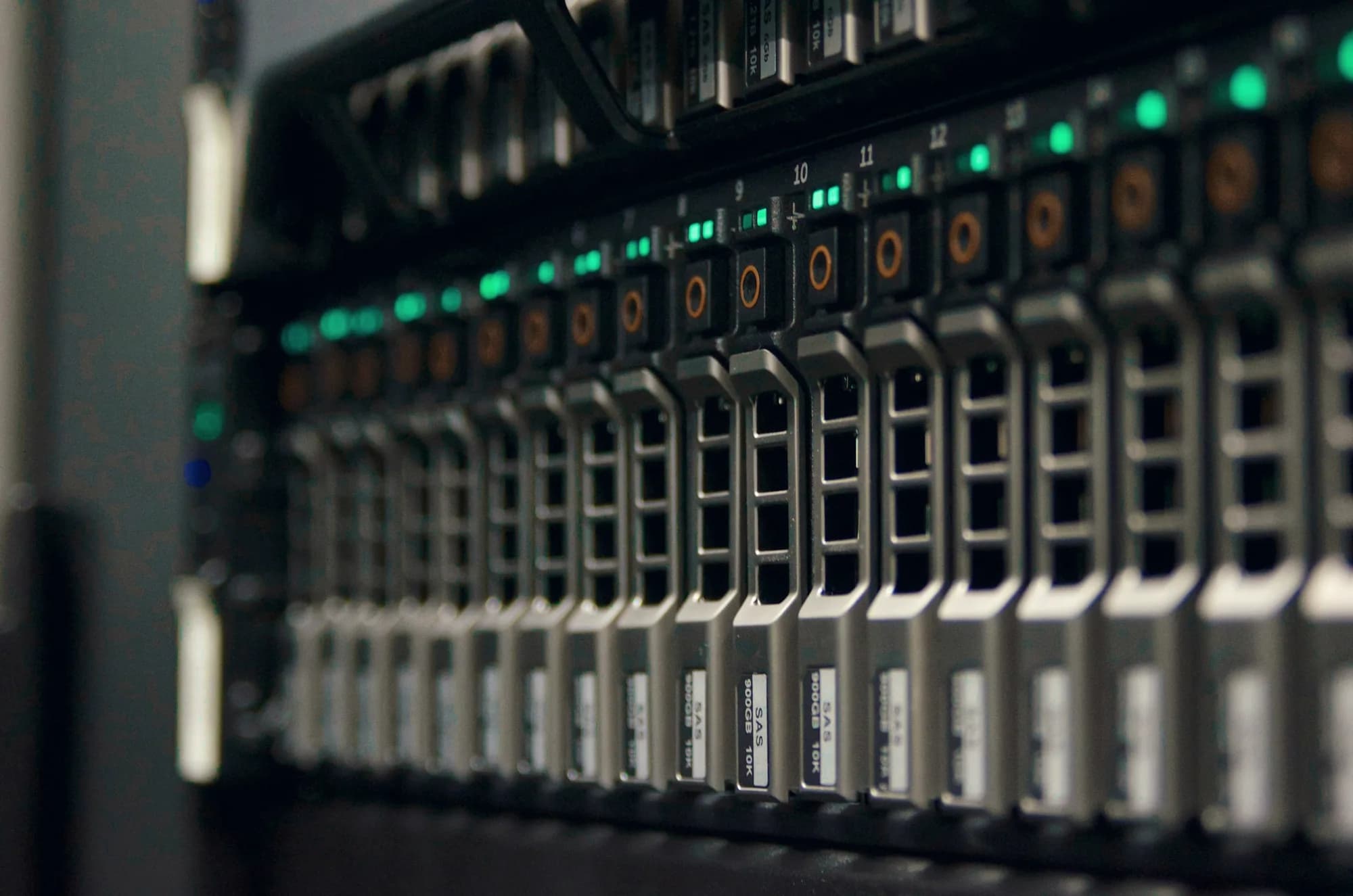
Standardising on a single build is the reason the rest of this company is simple. Here is exactly what runs your workload.
Ryzen 9 9950X.
In every single node.
One decision explains most of this company: every node runs the same desktop-class Zen 5 processor instead of a server part chosen for core count. Published single-core scores put it roughly 60% ahead of the enterprise Xeon and EPYC parts normally rented out, and single-thread speed is what page loads, game tick rates and build times actually depend on.
Architecture
Zen 5 · 4 nm
Cores / Threads
16 / 32
Boost clock
Up to 5.7 GHz
Base clock
4.3 GHz
L2 + L3 cache
80 MB
Memory
DDR5 ECC
PCIe lanes
28 × Gen5
AVX-512
Full 512-bit
Single-thread performance
- AMD Ryzen 9 9950X3,380
- AMD EPYC 9454P2,150
- Intel Xeon Gold 6548Y+2,040
- AMD EPYC 75431,720
- Intel Xeon E5-2697 v41,090
Approximate published benchmark averages, shown for reference. Your own results depend on the workload, the memory configuration and virtualization overhead.
What is inside a node
Quantities vary with the plan you buy. The parts do not.
| Processor | Processor AMD Ryzen 9 9950X 16 cores and 32 threads, 4.3 GHz base, up to 5.7 GHz boost, 80 MB of cache, Zen 5 on TSMC N4P. |
|---|---|
| Memory | Memory DDR5-5600 96 GB in the node, at JEDEC timings. Virtual plans take their share of it. |
| Boot and data | Boot and data Local NVMe Gen4 A 2 TB drive in the node itself, with no storage network in the path. There is no mirror behind it, so backups are what protect your data. |
| Management | Management Out-of-band controller Power cycling, reinstallation and console access independent of the installed operating system. |
| Network | Network 1 Gbps uplink Unmetered rather than sold against a monthly transfer allowance, so sustained traffic does not change the invoice. |
| Cooling | Cooling High-static-pressure airflow Sized so the processor holds its boost behaviour under sustained all-core load rather than throttling back. |

What sameness buys you
One build
Every node is specified identically, so performance does not depend on which machine you land on.
One spare parts pool
A failed drive or memory module is replaced from stock, not ordered in.
One tuning target
Kernel, scheduler and storage settings are tuned for one architecture instead of averaged across several.
Your disk is in the machine.
Not on the network.
Every node writes to NVMe Gen4 bolted into the same chassis as the processor running your workload, so a write goes to the drive instead of across a storage fabric. That is speed rather than safety: there is no mirror behind the drive, so snapshots and the daily backup add-on are what keep a second copy of your data.
Local write path
nvme0n1 on PCIeYour application
write(4096 bytes)
NVMe Gen4 · attached to this nodeWRITE
No iSCSI target, no storage fabric, no remote array in the path
2 TB
Local NVMe in every node
NVMe Gen4
Interface
None
Storage network in the path
None
Mirror behind the drive
Why not network storage? Because a commit to local NVMe never leaves the machine. Databases, game worlds and build caches read straight off PCIe instead of crossing a storage fabric. We do not publish a throughput or IOPS number for the drive, because we have not measured one we would be happy to be held to.
Operating systems we maintain
These are the images available for virtual machines and bare metal. Each one is patched and reinstallable from the client area.
- Ubuntu 24.04 LTS
- Ubuntu 22.04 LTS
- Debian 13
- Debian 12
- AlmaLinux 9
- Rocky Linux 9
- Windows Server 2022
- Windows Server 2025
Windows images require the Windows Server licence add-on. Bare metal customers may install anything they like.
How much of this machine do you need
The three ways to buy this hardware differ only in how much of the processor is yours and whether anyone else is on the board. A Ryzen VPS is sold a share of threads and is the right default for a website, an API, a mail server or a staging box. A Ryzen VDS reserves its cores so no other customer can schedule work on them, which is what you want for a database, a CI runner or a game backend that must not stutter when a neighbour gets busy.
A bare metal server is the whole 16-core, 32-thread processor with ECC memory, out-of-band management and nobody else on the machine, including no virtualisation layer between your kernel and the silicon. If what you are running is a game server rather than a machine, game hosting sells the same hardware by memory and installs the title for you.
Where all of this physically sits, who owns the building and how a deployment reaches you are set out on the data center page.

Pick a plan, pay with Stripe,
sign in with Discord.
Chicago deployments come online about a minute after the payment clears. There is no setup fee, no password to invent and no contract beyond the term you choose.